Hair Procreate Brushes
Updated October 2026
Hair Procreate brushes for portrait and character art: individual strands, curls, waves, short hair. Free & premium packs.
Brusher app for iPad & iPhone
200+ sets in the Brusher app, hair included — plus free brushes and free tools.
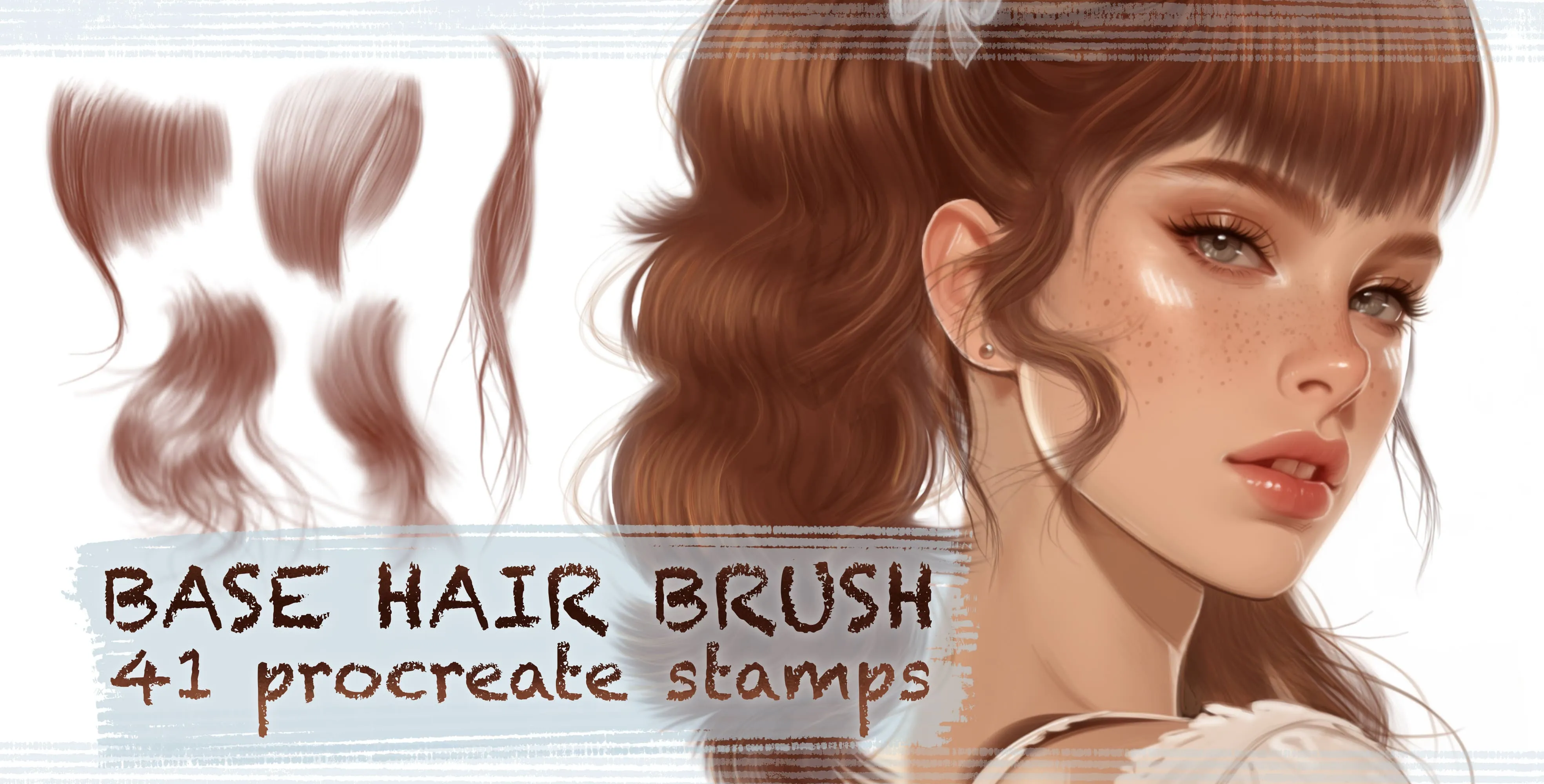
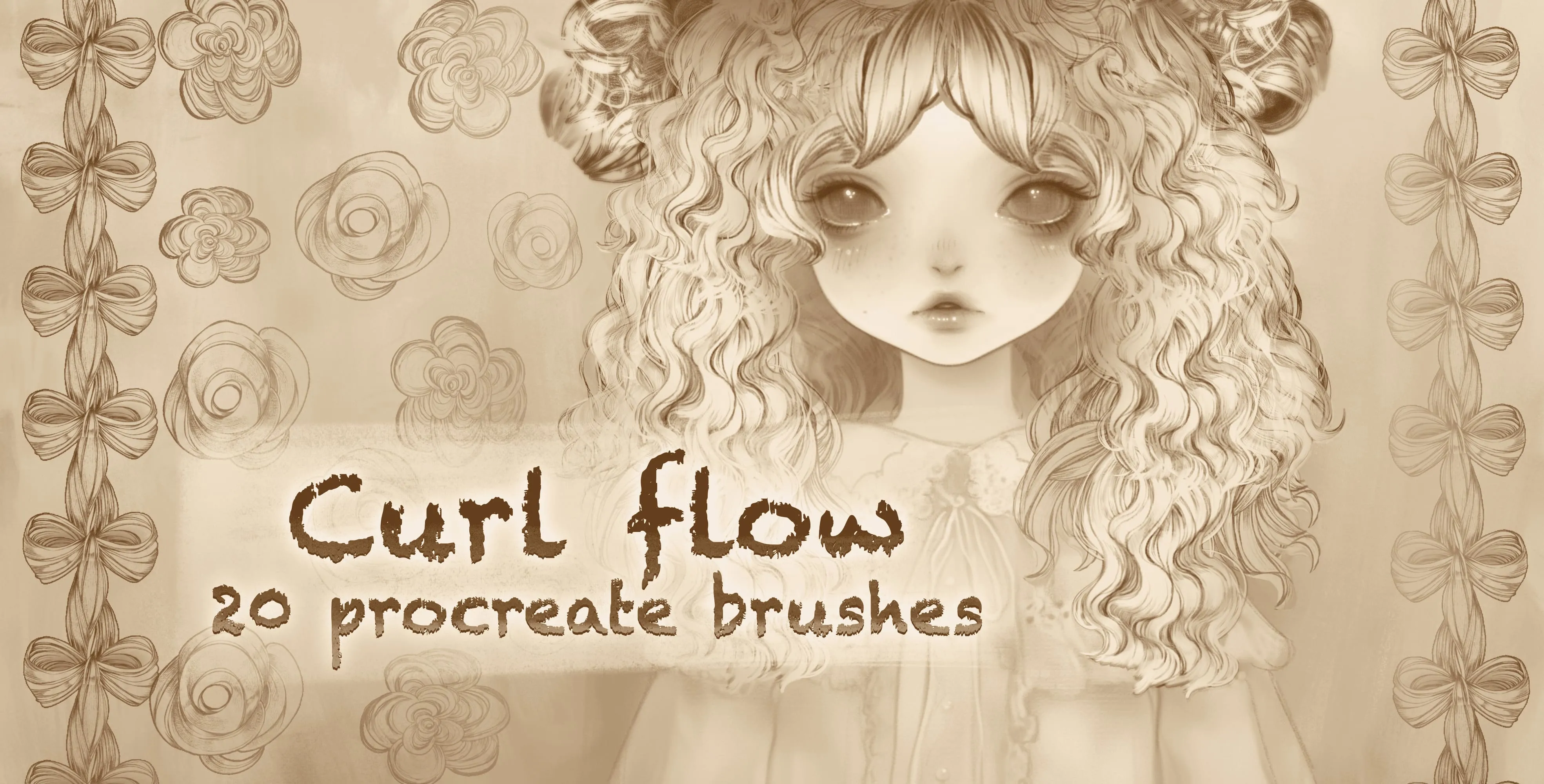
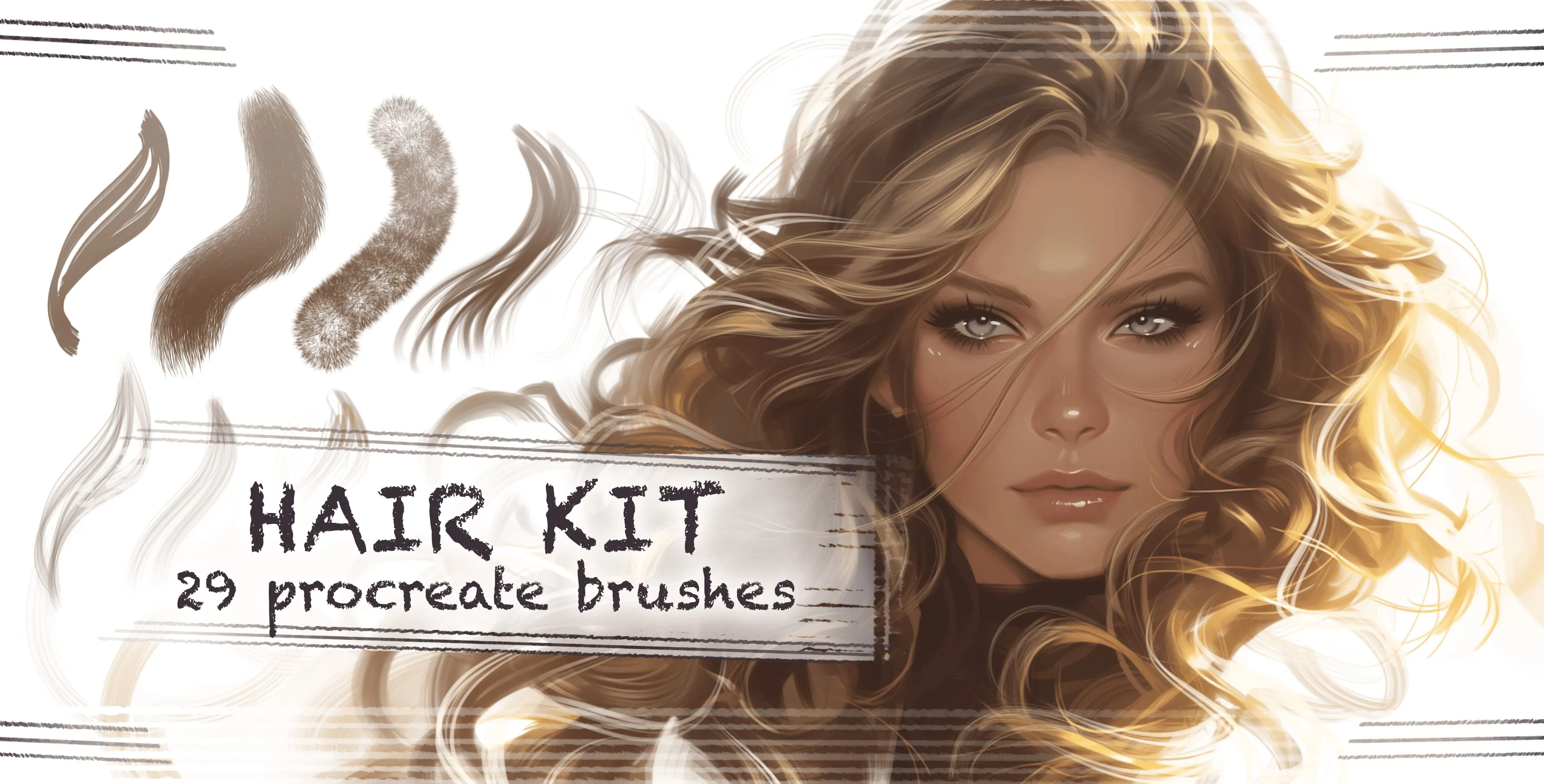
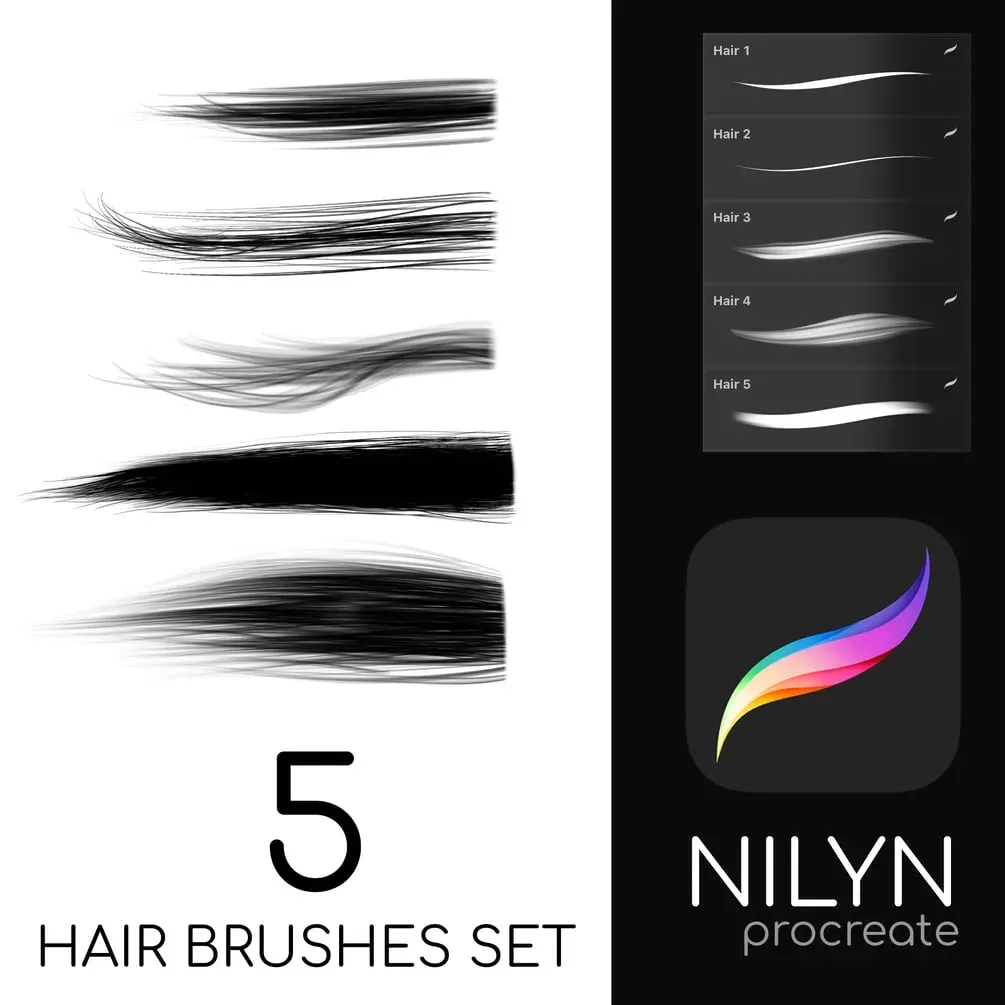
Brusher has 4 hair Procreate brush packs — realistic strands, curls & waves, short hair — each a native .brushset that installs into Procreate in one tap on iPad.
Hair Procreate brushes take the tedium out of one of digital painting's slowest jobs. Instead of drawing thousands of individual strands, a hair brush lays down whole clumps of tapered lines in one stroke, following your hand as it curves — so a full head of hair or a flowing braid comes together in minutes, not hours. Some are stroke brushes that paint strands; others are stamps that drop a finished hairline or braid in a single tap.
The packs here cover the full pipeline: multi-strand liners for the bulk of the hair, single fine liners for flyaways, and stamp brushes for repeating details like braids and curls.
Hair Procreate Brushes
Procreate Video Base Hair
hair strand, clump, flowing lock and hair-mass
Procreate Video Curl Flow
decorative curl-and-bow flow brushes drawing swirls, coils and ribbon flourishes, each also in a dual-tone version with built-in shading
Procreate Video Hair Kit
a hair base brush, single and multi-strand hair, soft-edge and flowing hair, 14 numbered hair brushes, 5 hair-highlight brushes, plus short fur, sparse fur and pom-pom brushes
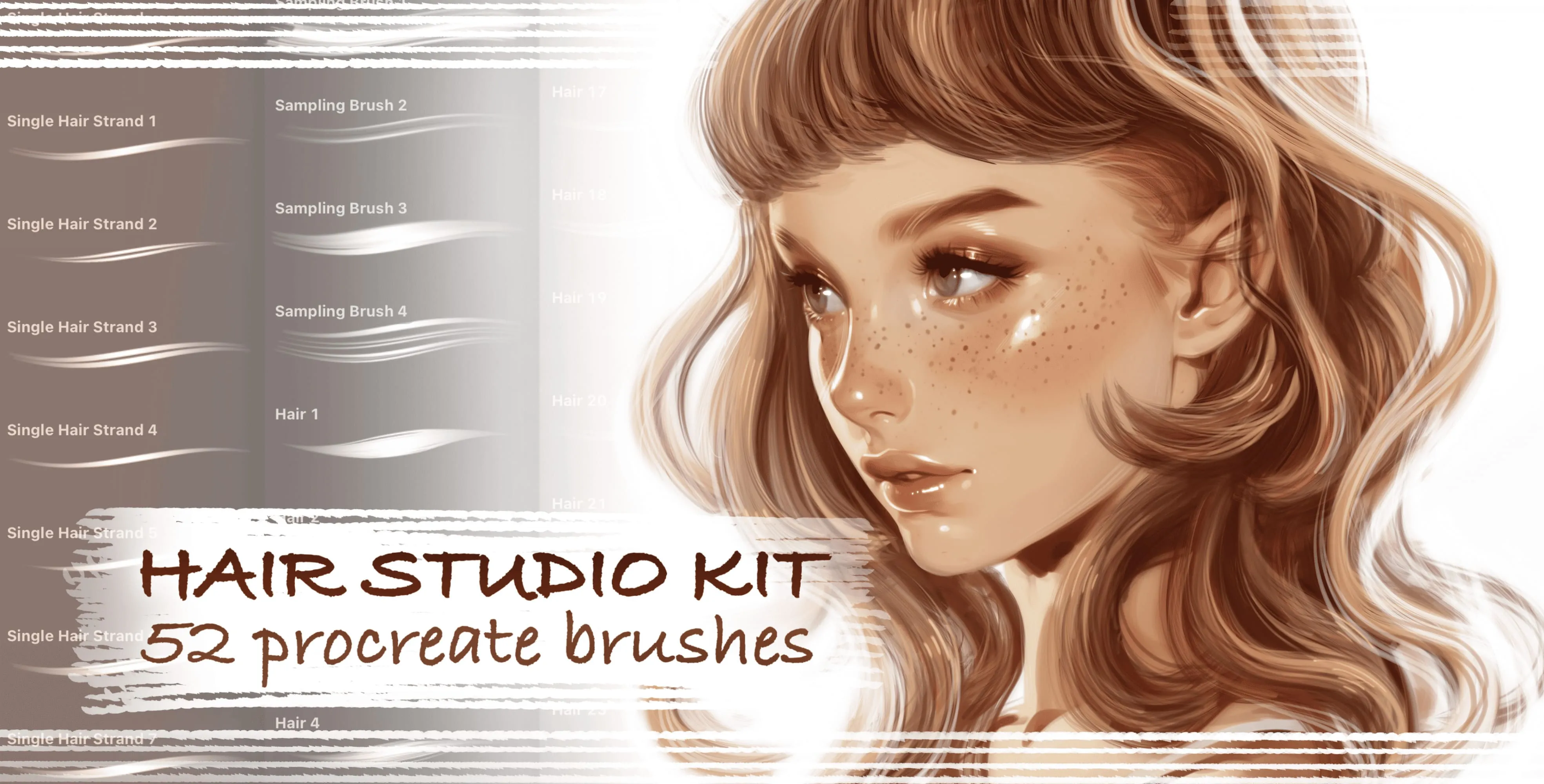
Procreate Video Hair Studio Kit
single hair strands in 8 variations, six-strand and multi-line brushes, 24 hair flow brushes and 12 random-colour brushes that lay down multi-toned strands
Free from independent artists
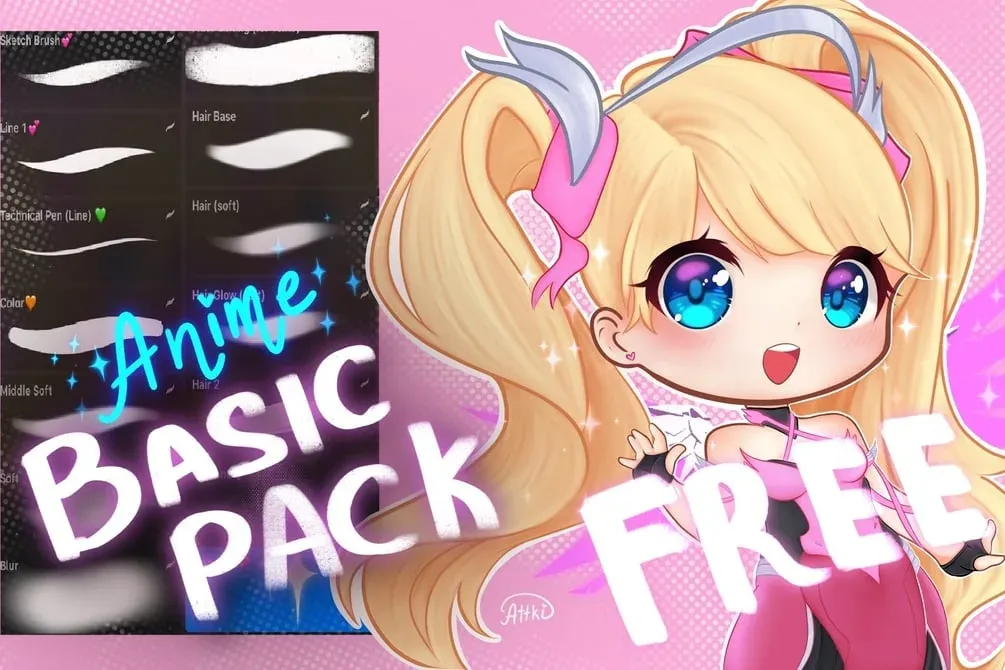
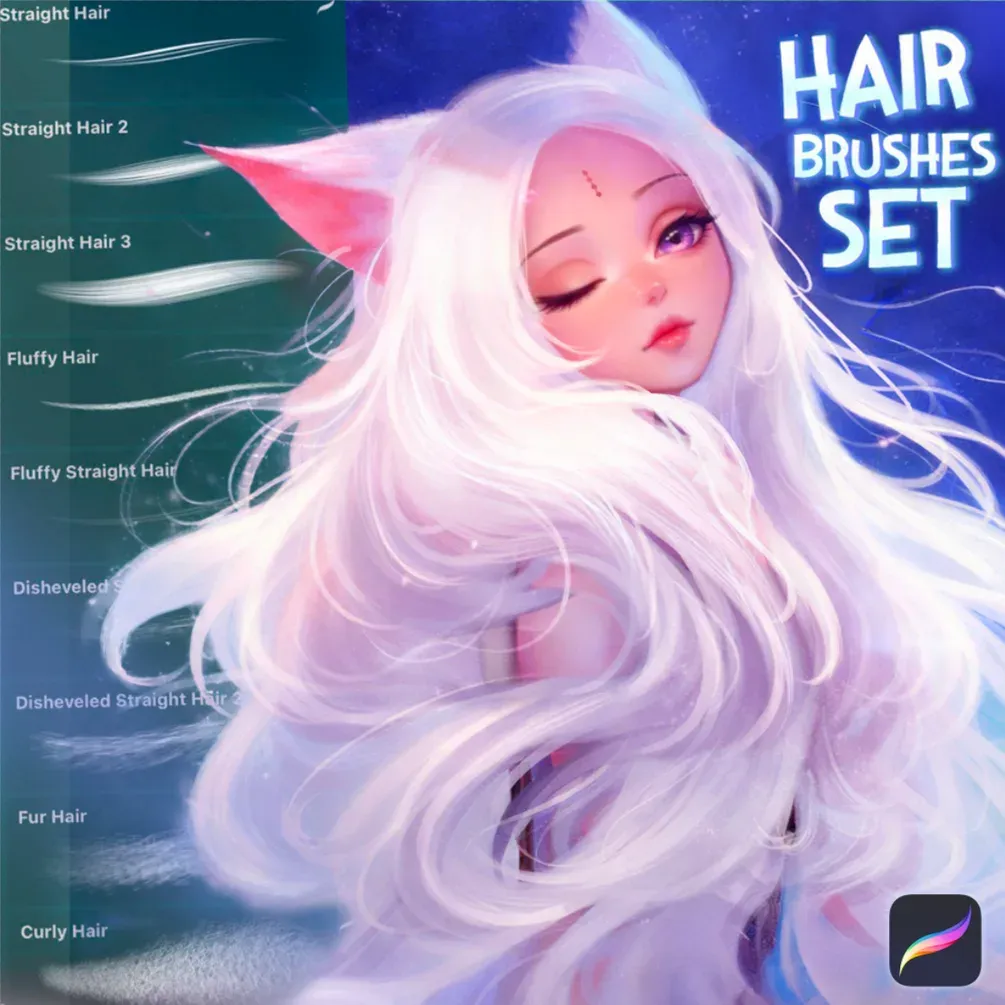
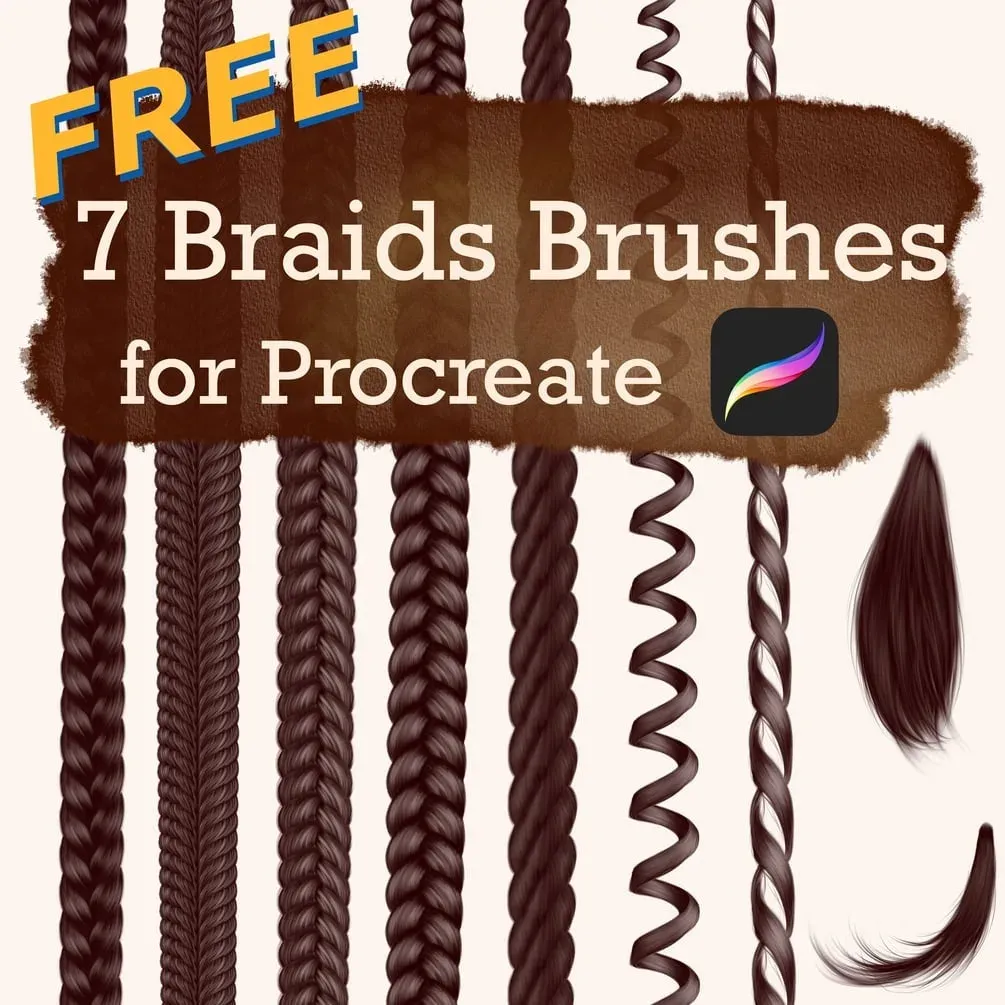
Free hair sets by other artists — downloaded from the artist's own page.
 Scan → get the app
More brush packs in the app
The site is still filling up — the Brusher app already has the complete 200+ set library, with more hair packs, plus free brushes and free tools.
Popular hair styles
Hair brush vs hair stamp
A hair brush is a stroke tool — drag it and it paints a ribbon of parallel, tapered strands that follow your path. It gives you full control over flow and direction, which is why it suits the main mass of hair. A hair stamp is a pre-made shape — a braid section, a curl, a full hairline — that you drop and transform into place, ideal for repetitive or symmetrical details.
Most artists use both: stroke brushes to lay the overall shape and movement, then stamps for braids and structured detail, then a fine single-strand brush to break up the edges so the hair doesn't look cut with scissors.
Painting believable strands
Hair reads as real when it has direction and clumping. Build it in layers: a dark base shape, then mid-tone strands following the flow, then a few bright highlight strands on top and a few dark ones tucked underneath. Vary your pressure so strands taper naturally, and always follow the curve of the skull rather than drawing straight down.
For curly hair, work in stacked S-curves and let a curl stamp handle the tightest coils. For braids, a braid stamp gives you a consistent weave you can bend along a path — far cleaner than trying to freehand the over-under pattern.
How to paint hair in Procreate
A layered approach that turns a flat hair silhouette into strands with flow, depth and shine.
- 1
Block the silhouette
Fill the overall hair shape in a mid-dark base colour on its own layer. Get the outer contour and parting right before you think about strands.
- 2
Establish the flow
With a multi-strand hair brush, lay strokes that follow the curve of the skull and the direction the hair falls. This flow is what sells the whole piece.
- 3
Add the mid-tones
On a new layer, paint lighter strands over the base, clumping them into groups rather than spreading them evenly — real hair travels in bundles.
- 4
Drop in highlights
Add a bright highlight band where light hits, using thin tapered strands. Keep it to one main shine so the hair doesn't look wet all over.
- 5
Stamp the details
Use braid or curl stamps for structured sections, transforming each to sit along the hair's flow, then blend their edges into the painted strands.
- 6
Break up the edges
Finish with a fine single-strand brush, flicking a few flyaways beyond the silhouette so the hairline looks soft and natural, not cut clean.
Hair brushes — FAQ
What's the difference between a hair brush and a hair stamp?+
A hair brush is a stroke tool that paints a ribbon of tapered strands as you drag, giving you control over flow. A hair stamp drops a ready-made shape — a braid, curl or full hairline — that you place and transform. Most artists use brushes for the mass and stamps for repeating detail.
What's the best brush for curly hair?+
Use a multi-strand brush worked in stacked S-curves for the overall shape, then a curl stamp for the tightest coils. Building curls in layered clumps rather than uniform lines keeps them looking springy instead of flat.
How do I draw realistic strands?+
Build hair in layers — a dark base, mid-tone strands, then bright highlights — and always follow the curve of the skull. Clump strands into bundles, vary your pressure so they taper, and flick a few flyaways past the edge so the hairline looks natural.