How to Draw Tanghulu in Procreate
By Julia White — painted in Procreate with Brusher brushes · Updated October 2026
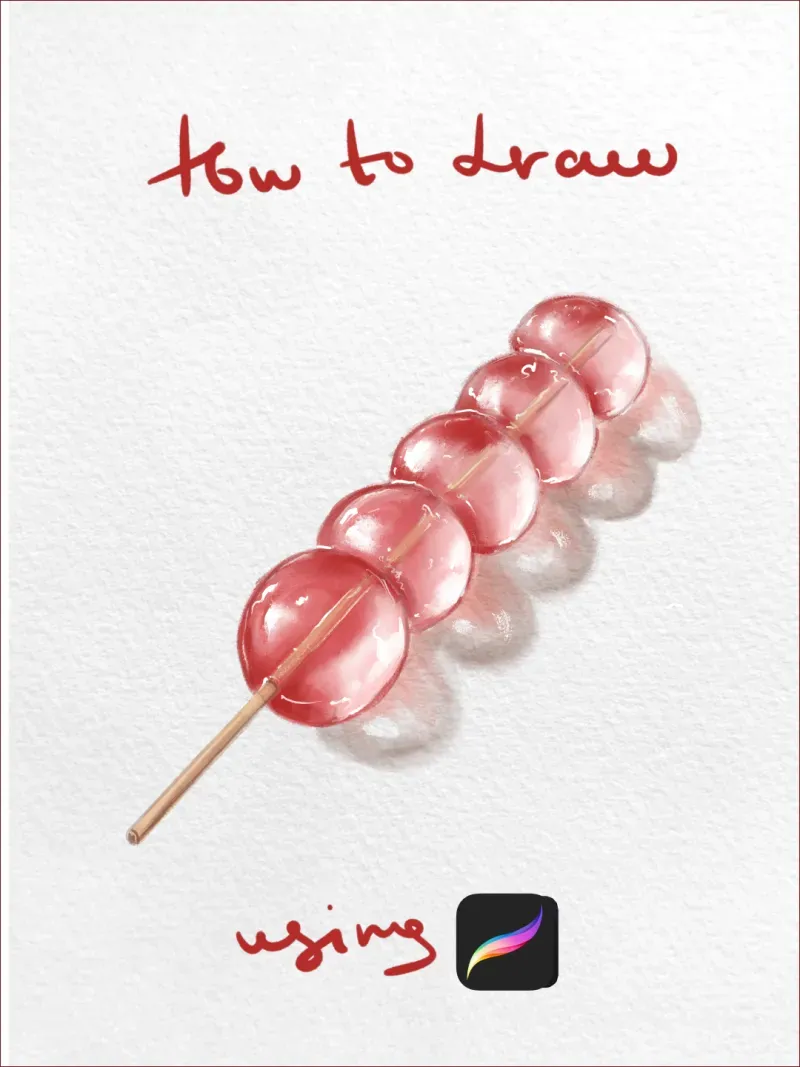
Tanghulu is a good subject for a very specific reason: it's five identical spheres in a row, so once you work out how to shade one, you've worked out how to shade all of them. The whole piece is really one shape repeated with a rhythm, strung on a single line.
The part that actually sells it isn't the fruit — it's the candy shell around it. Fruit reads as matte; a glassy sugar coating reads as hard, bright and reflective, and that difference comes entirely from how sharp and how white you let the glare get.
Step by step
- 1
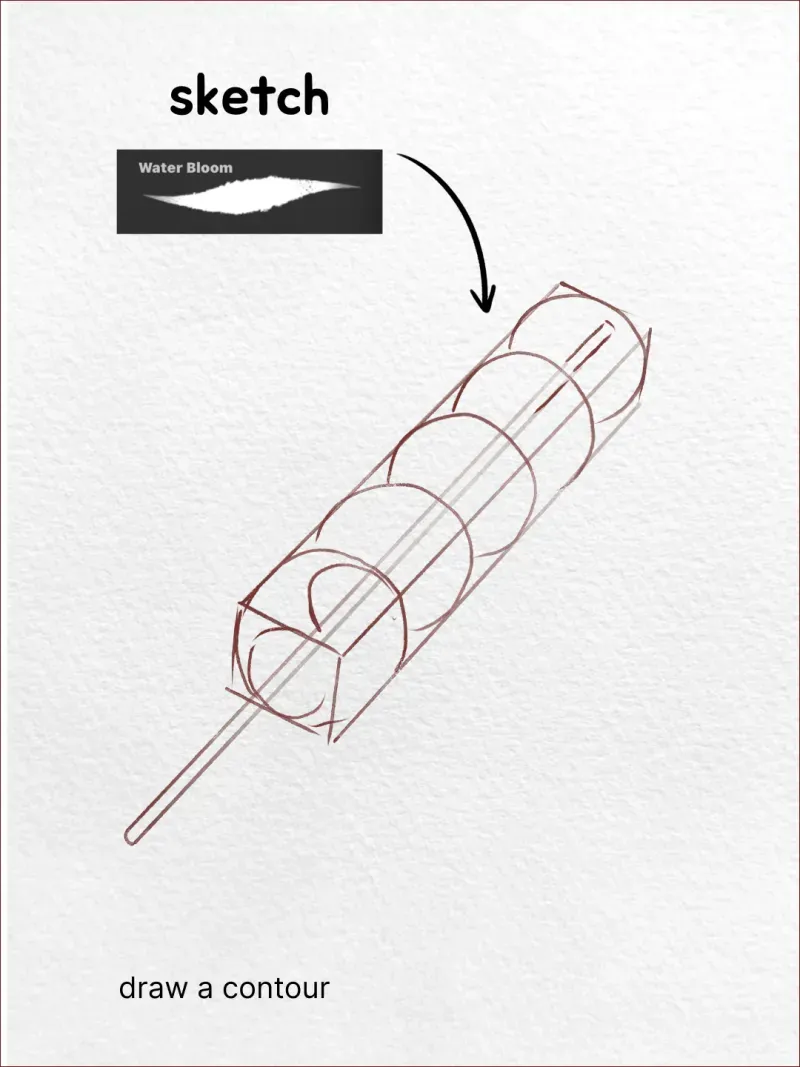
Sketch the outline Water Bloom
Draw the skewer stick first as a single guideline, then build five overlapping circles along it, each nesting slightly into the one before. Keep the circles genuinely round here — ovals or lopsided shapes will read as sloppy once they're glossy, because gloss draws the eye straight to the silhouette.
- 2
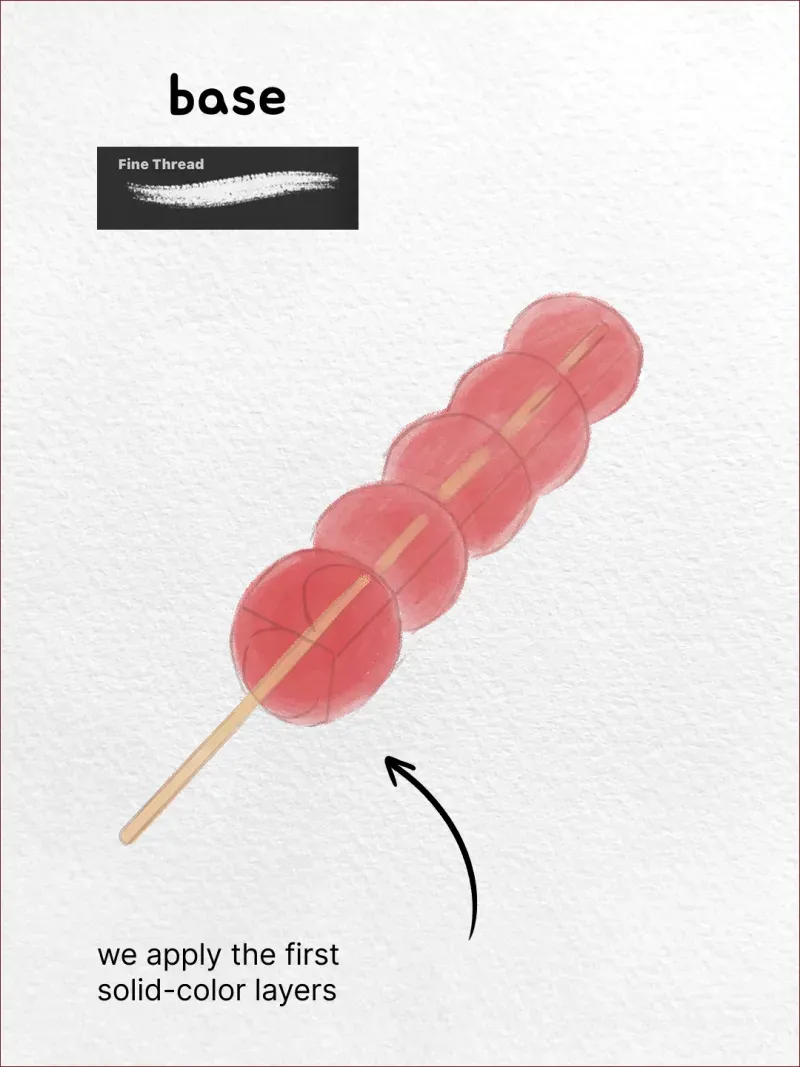
Lay the base colour Fine Thread
Fill each sphere with a flat mid-tone red on a layer beneath the sketch, and colour the stick a warm tan. Don't vary the red between spheres yet — sameness here is what makes the shading step read as one consistent light source later, not five separately-lit objects.
- 3
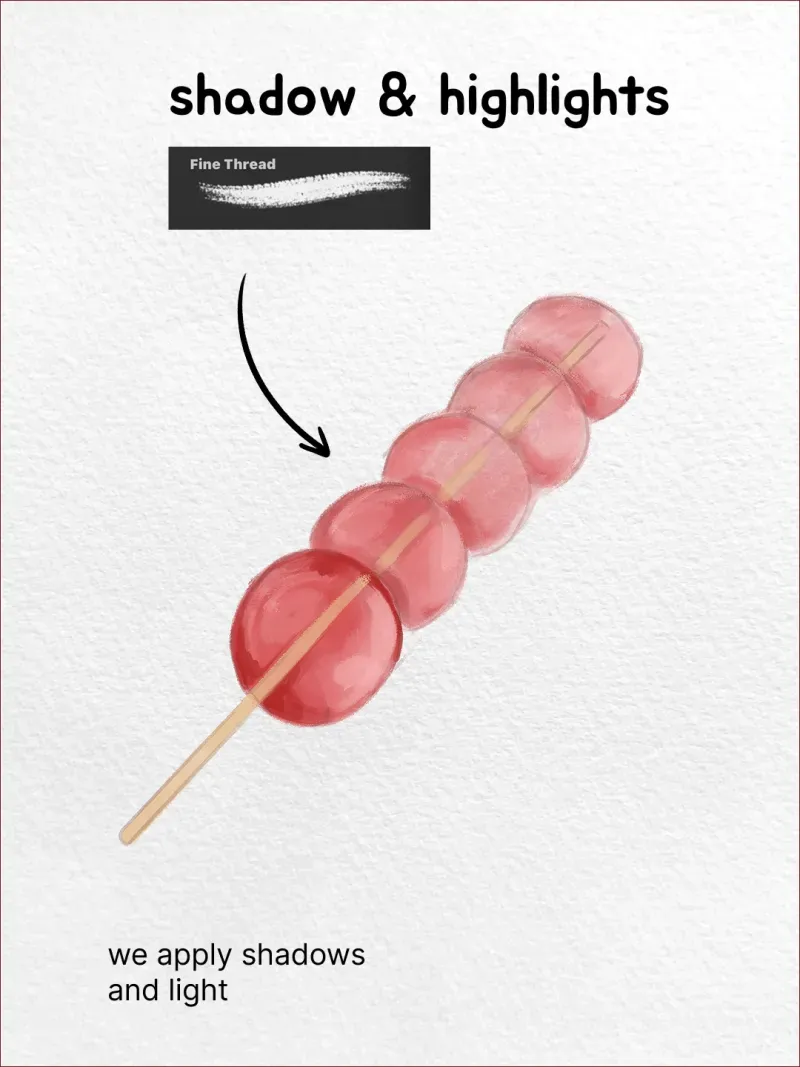
Add shadow and highlight to one sphere Fine Thread
Pick a single sphere to work out the lighting on: darker red where it curves away from the light, a lighter patch where it curves toward it. Treat it as a lighting recipe you're about to reuse, not a one-off — get the placement right once here.
- 4
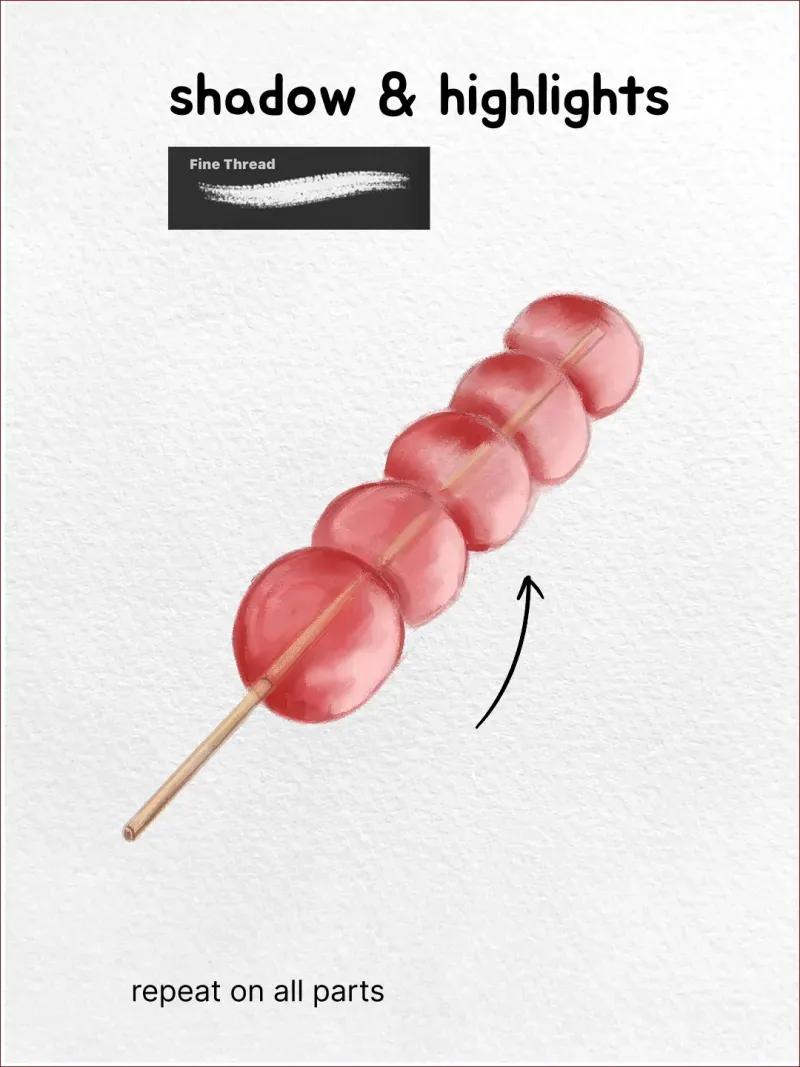
Repeat on every sphere Fine Thread
Copy that exact same shadow-and-highlight placement onto the remaining four spheres, adjusting only for how each one overlaps its neighbours. This repetition is the actual technique: identical lighting logic across every sphere is what makes five separate circles read as one continuous object.
- 5
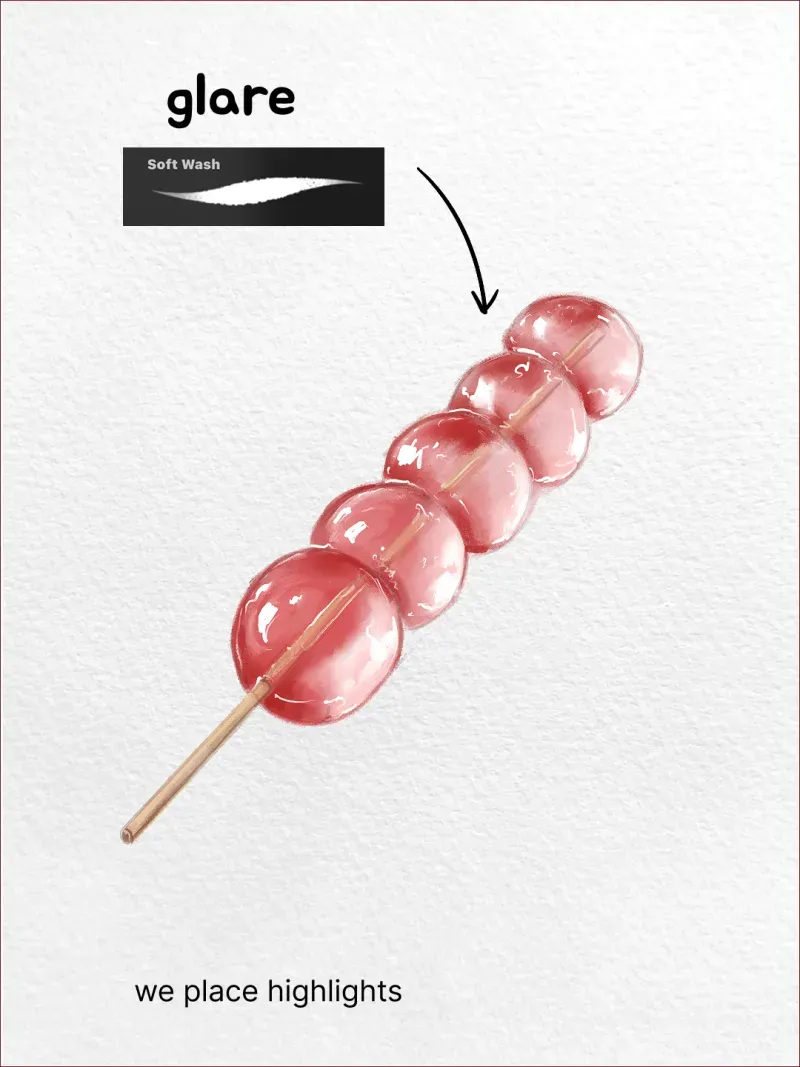
Place the glare Soft Wash
Add a bright, near-white streak across the upper curve of each sphere, angled the same way on all five. This is the single mark that turns a red ball into a piece of hard candy — without it, the fruit underneath still looks matte no matter how good the shading is.
- 6
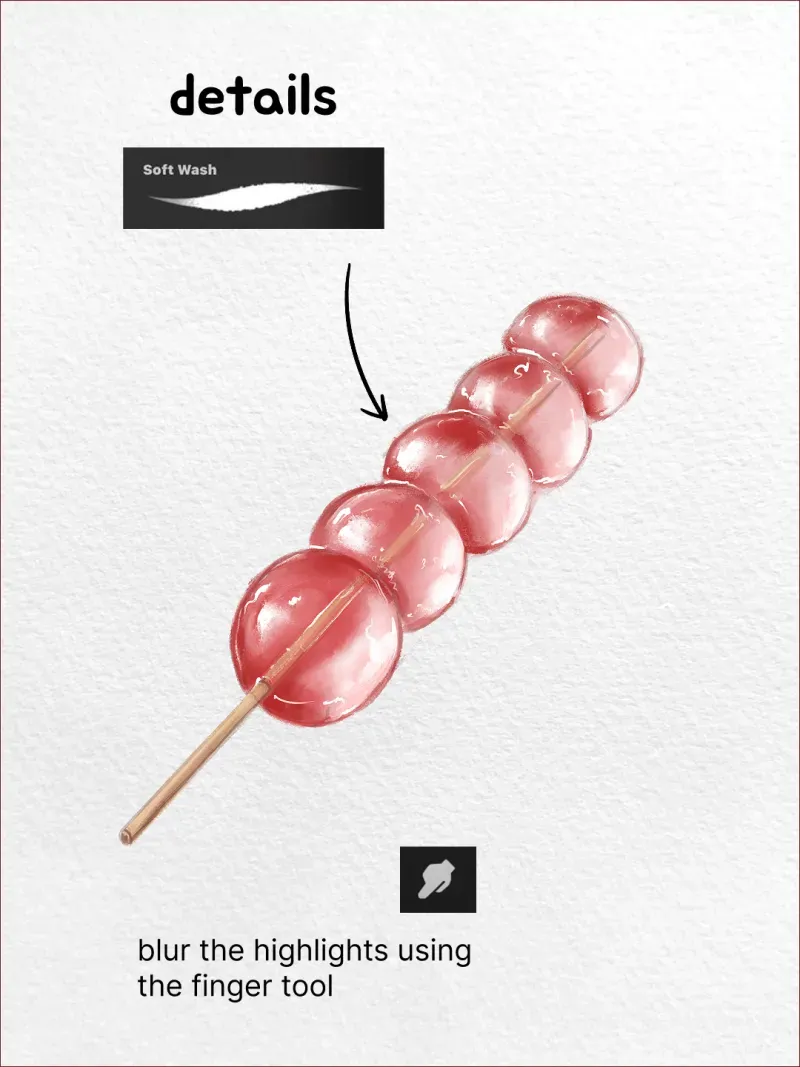
Soften the highlights Soft Wash + finger tool
Blend the edges of each glare with the finger tool, but only the edges — leave a small hard core at the brightest point. A glare that's soft all the way through looks like a matte sheen; one with a sharp centre and a soft fade looks like light bouncing off glass.
- 7
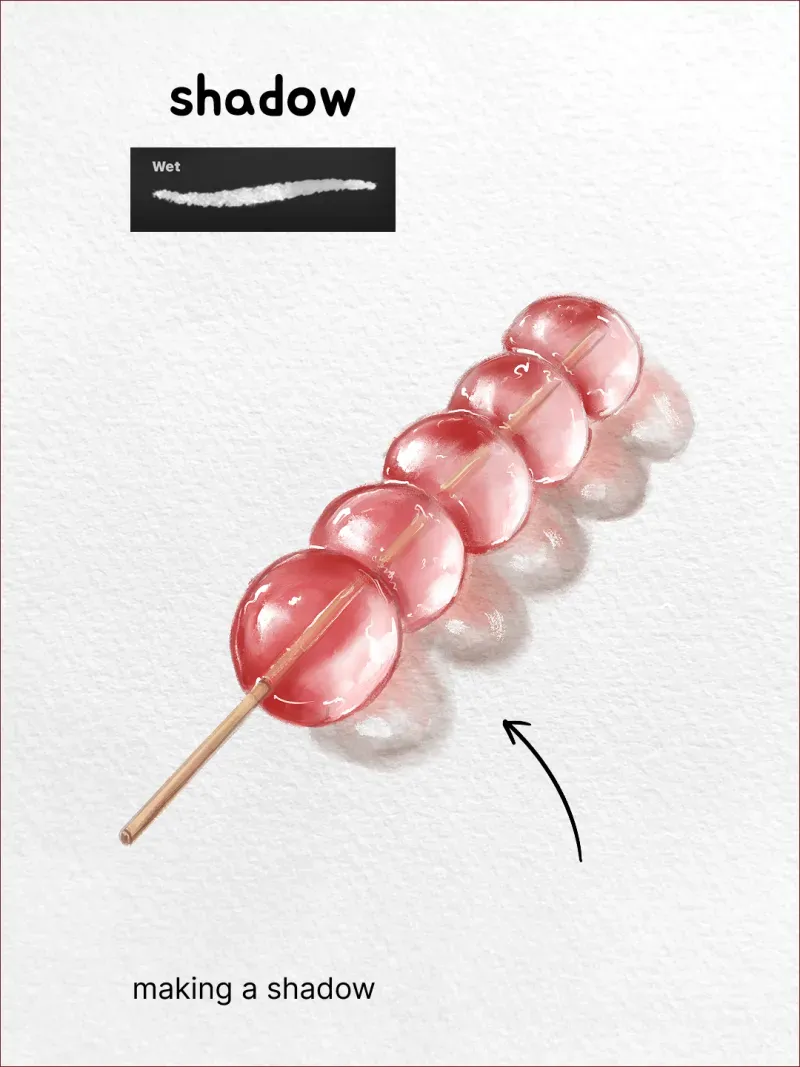
Cast a shadow Wet
Finish with a soft shadow behind and beneath the row of spheres, angled away from the glare. It's a small addition, but it's what lifts the skewer off the page instead of leaving it looking pasted onto flat white.
Brushes used
Painted with brushes from the Watercolor set. It's in the Brusher app. For the washes and grains used throughout, browse our watercolour Procreate brushes — wet-on-wet, dry-brush and wash behaviours, installed in one tap.
Want to build the brush yourself instead? Our guide on making your own Procreate brush includes a five-step watercolour recipe.
Frequently asked questions
Which brushes do I need to draw tanghulu?+
Three: an inky wash for the sketch, a fine dry-brush for the base colour and shading, and a soft wash for the glare — blended with the finger tool. A separate wet-edge brush handles the cast shadow at the end. Any watercolour set with a dry-brush, a wash and a wet-edge behaviour will cover it.
Why does my tanghulu look like fruit instead of candy?+
Almost always the glare. A candy shell needs one bright, near-white highlight with a sharp core and only its edges softened — if the whole highlight is blended evenly, it reads as a matte skin instead of a glassy coating.
Do all five spheres need different shading?+
No — the opposite. Working out the shadow and highlight placement once and repeating it identically on every sphere is what makes them read as one object strung on a stick, rather than five separately lit balls that happen to be touching.
What is tanghulu, exactly?+
A Chinese candied-fruit skewer — traditionally hawthorn berries, though strawberries and grapes are common now — dipped in hot sugar syrup that hardens into a thin, glass-like shell. The visual hook is exactly what this tutorial is about: fruit underneath, glass on top.